Standing desk chair guide
The Chair I’d Look For Before Turning a Standing Desk Into All-Day Strain
Last updated:
A chair for a standing-height desk needs to meet the work surface while giving your feet somewhere secure to rest. Measure the desk's working height, then compare seat adjustment range, foot-ring position, back support, and base stability. Consider whether you need full seated support or a brief perch between standing tasks. The goal is an easy change of position, not a tall chair that leaves you reaching for the keyboard or balancing on unsupported feet.
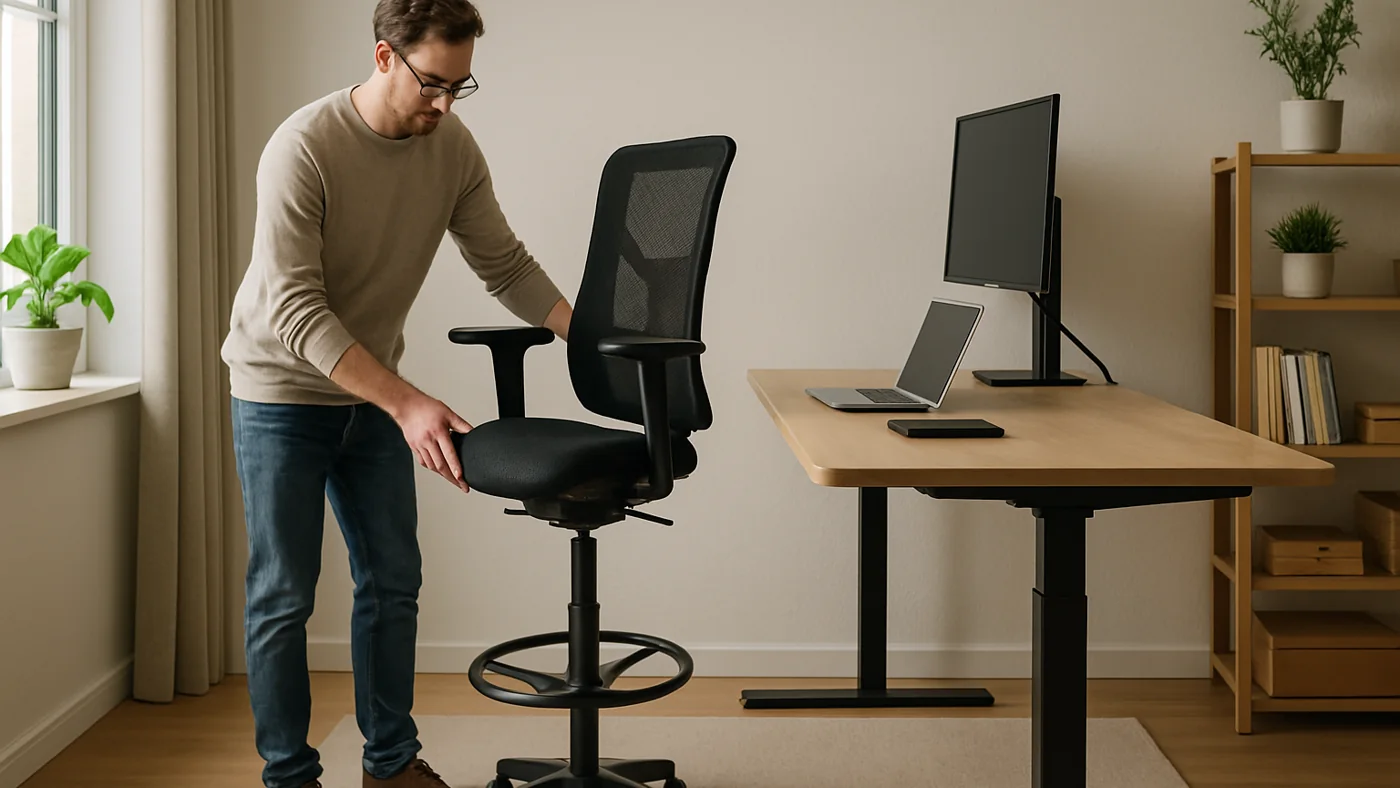
I like standing desks, but I do not think every workday should become a contest of endurance. The best setup gives you options: stand when focus feels better, sit when detail work needs steadiness, and switch without rebuilding the room. That is where a standing ergonomic office chair earns its place.
If you are comparing models, the useful question is not simply which chair looks the most professional. I would start with fit: seat height, foot support, back support, wheel behavior, and whether the chair makes the desk easier to use. For a product-focused shortlist, I’d pair this checklist with LeStallion’s guide to the best standing ergonomic office chair.
1. Why standing desk users still need a serious chair
A standing desk does not remove the need for support. Long work blocks still include calls, writing, reading, and small tasks where sitting makes sense. A tall ergonomic chair helps when it keeps the body close to the workstation without forcing raised shoulders or dangling feet.
2. Seat height and sit-stand range matter first
The chair needs to meet the surface. If the seat range is too low, you hunch upward toward the desk. If it is too high, the feet lose support and the chair feels like a perch. I would check the desk height before falling in love with a chair style.
3. Foot support is not optional on tall chairs
Many uncomfortable tall chairs fail because the feet have nowhere to rest. A stable foot ring or properly placed footrest helps the user settle instead of sliding forward. This is especially important for longer writing or computer sessions.
4. Back support should match how you work
Some standing desk users need a supportive mesh back for longer seated blocks. Others prefer a lighter drafting-style chair for quick transitions. Neither is automatically better; the right choice depends on whether the chair is used for deep desk work or short rests between standing tasks.
5. Casters and base stability decide daily confidence
A chair that rolls too easily can feel nervous. A chair that resists movement can feel clumsy. I look for a stable base, floor-appropriate casters, and a movement pattern that feels controlled when turning toward shelves, drawers, or a second monitor.
6. My practical buying checklist
- Measure desk height before comparing chair height.
- Confirm foot ring or footrest comfort.
- Choose back support based on actual sitting duration.
- Match casters to the floor surface.
- Check whether the chair can tuck into the room.
- Use the standing ergonomic office chair recommendations as a shortlist, not a substitute for fit checks.
FAQs
What is a standing ergonomic office chair?
It is a taller adjustable chair designed to pair with sit-stand desks, drafting-height desks, or standing workstations.
Is a drafting chair the same thing?
Sometimes the categories overlap, but not every drafting chair has the ergonomic support or foot positioning a long desk session needs.
What should I check first?
Start with seat height range, foot support, back support, caster stability, and whether the chair fits under or beside the desk.
Can a standing chair replace standing breaks?
No. It should support healthier transitions, not turn a standing desk into another fixed sitting station.
Where should I compare options?
Use this guide as a fit checklist, then review specific models in the LeStallion standing ergonomic office chair article.
Blue Office Chairs at Desk Height
The next guide shifts from standing-desk fit to blue ergonomic office chairs. Treat color as a separate preference, and recheck the seat-height range rather than assuming a blue chair suits a tall workstation.
https://s3.wasabisys.com/ls-blue-seat/lestallion/blue-seat/index.html
Related resource
For a neighboring workspace seating topic, see the Stool Studio guide to rolling stool fit and use.